The Development
Control Plan
What the Development Control Plan is, what it controls, and how it shapes the precinct.
What is a Development Control Plan?
If the Local Environmental Plan (LEP) decides what can happen on a site, the Development Control Plan (DCP) decides how it's done: the way buildings sit and look, how the land is subdivided, the streets and access, landscape, drainage, bushfire protection and environmental management.
The two are separate documents. The Byron Local Environmental Plan 2014 is the legal instrument that sets land use and the headline limits. The Byron Development Control Plan 2014 sits beneath it and fills in the detail. The Planning Proposal changed the LEP so an employment precinct could be planned here; the DCP is a new chapter of the DCP that guides how that precinct is designed and assessed.
A DCP guides and controls; it doesn't itself approve anything. Every future development application is assessed against it, and where the LEP or a State planning policy says otherwise, they override it. It's one of the main ways the quality of the precinct is held in place over time.
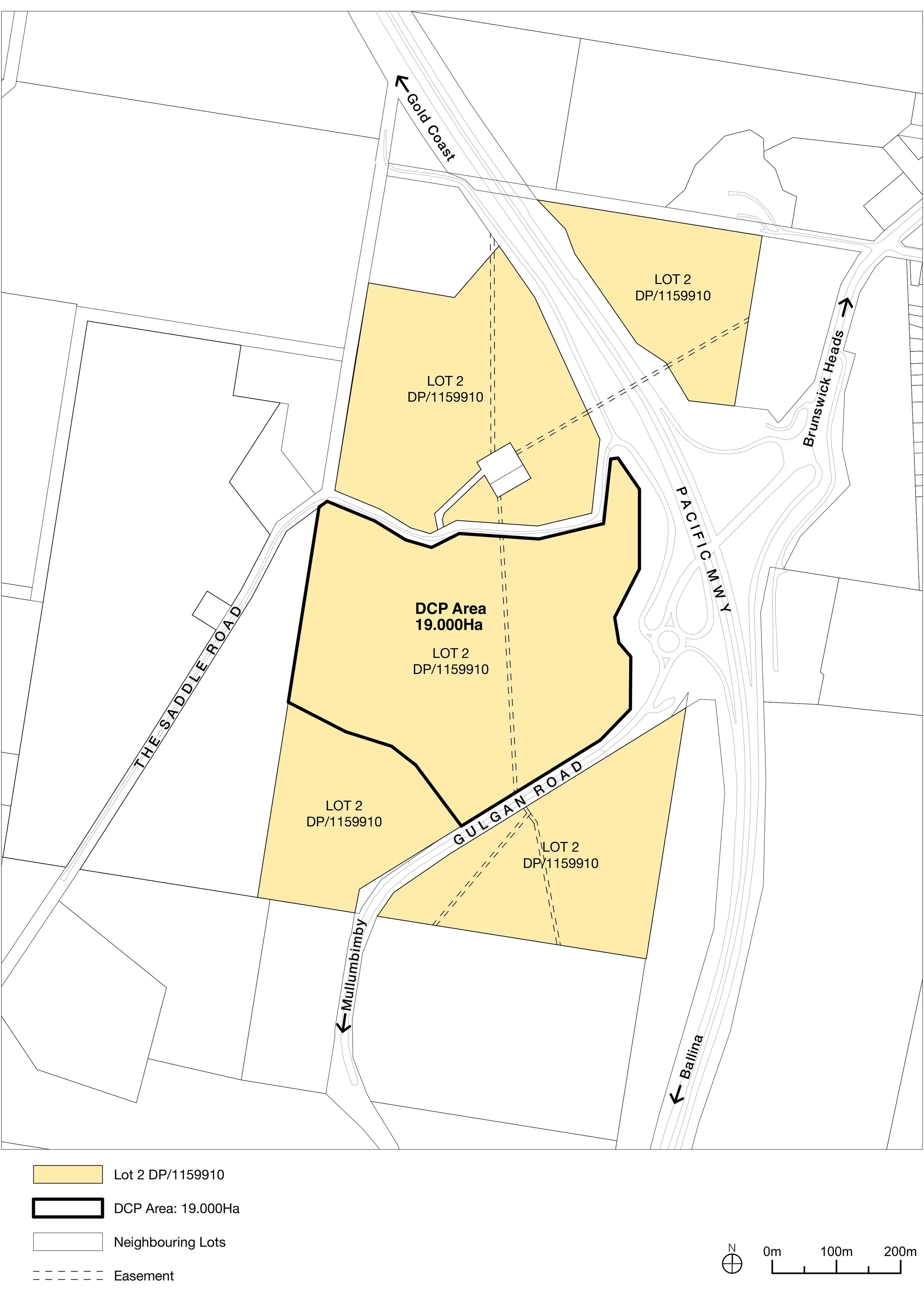
The BILS Area 5 DCP
(Chapter E11)
The controls for BILS Area 5 are set out in a dedicated chapter: Chapter E11 of the Byron Development Control Plan 2014. It was adopted by Council on 16 April 2026 and took effect on 30 April 2026, so it is now in force.
It has its own chapter because the standard Byron DCP chapters were never written for a precinct like this, with its mix of business-park, work-live and light-industrial space, its conservation land, and its undulating, rocky terrain.

Getting around
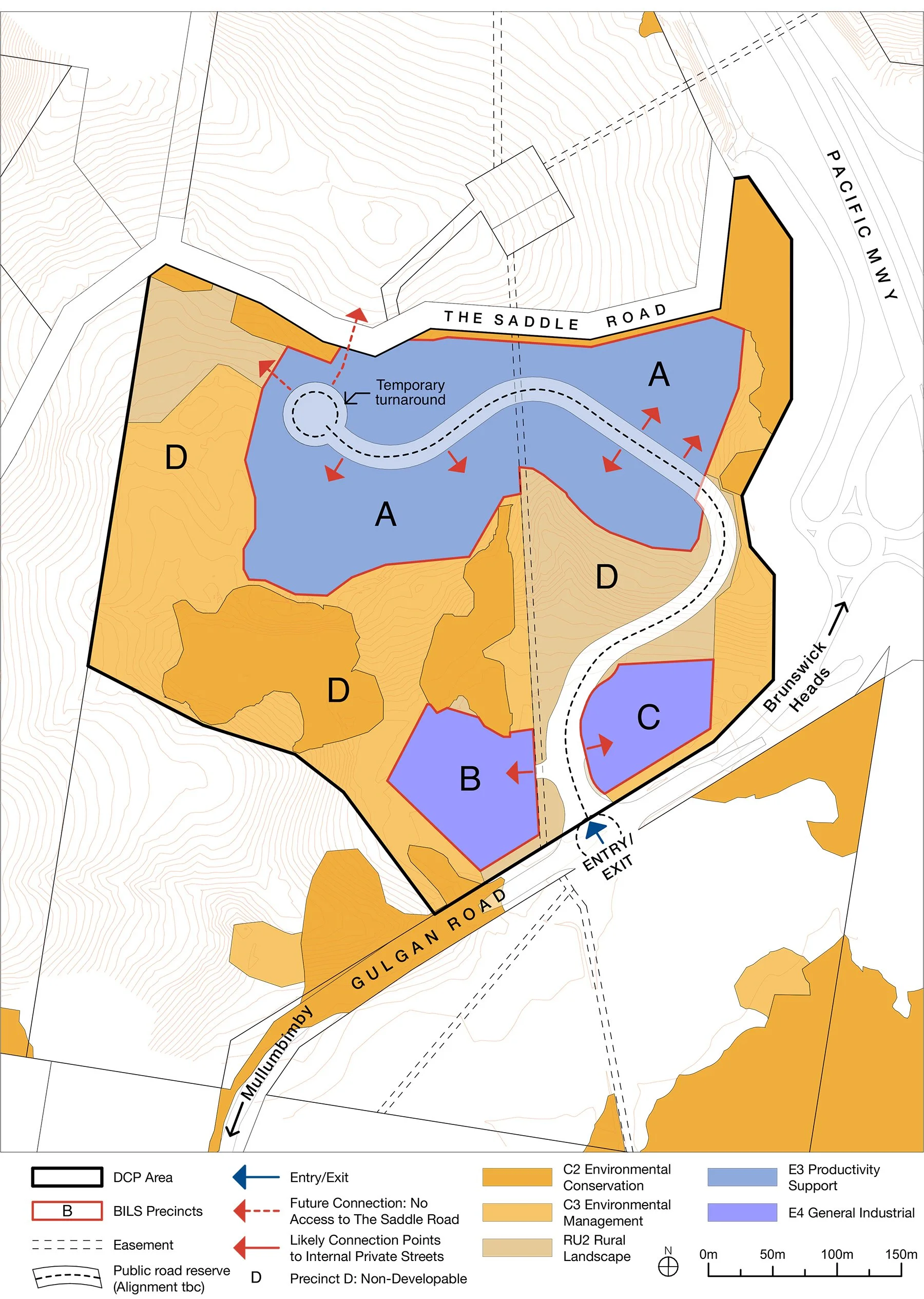
A new public collector road forms the spine of the precinct, designed to the NSW Design of Roads and Streets (DORAS) standard so it suits this setting rather than following a conventional industrial template. The chapter sets parking by use, requires electric-vehicle charging within easy reach of every premises, lets car-share contribute towards parking, and provides for the larger vehicles and loading that light industry needs.
Subdivision and long-term care
The whole precinct is held as a single Community Title scheme. A shared community lot holds the conservation land, internal roads, drainage and bushfire zones as common property, and a registered management statement binds every owner, present and future, to maintain them, so the green and shared parts can't be sold off or neglected. The working lots are at least 2,000m2 each and stay within the scheme. A suite of management plans, from contamination and acoustics to biodiversity and stormwater, must also be signed off before the first development application.
Caring for the environment
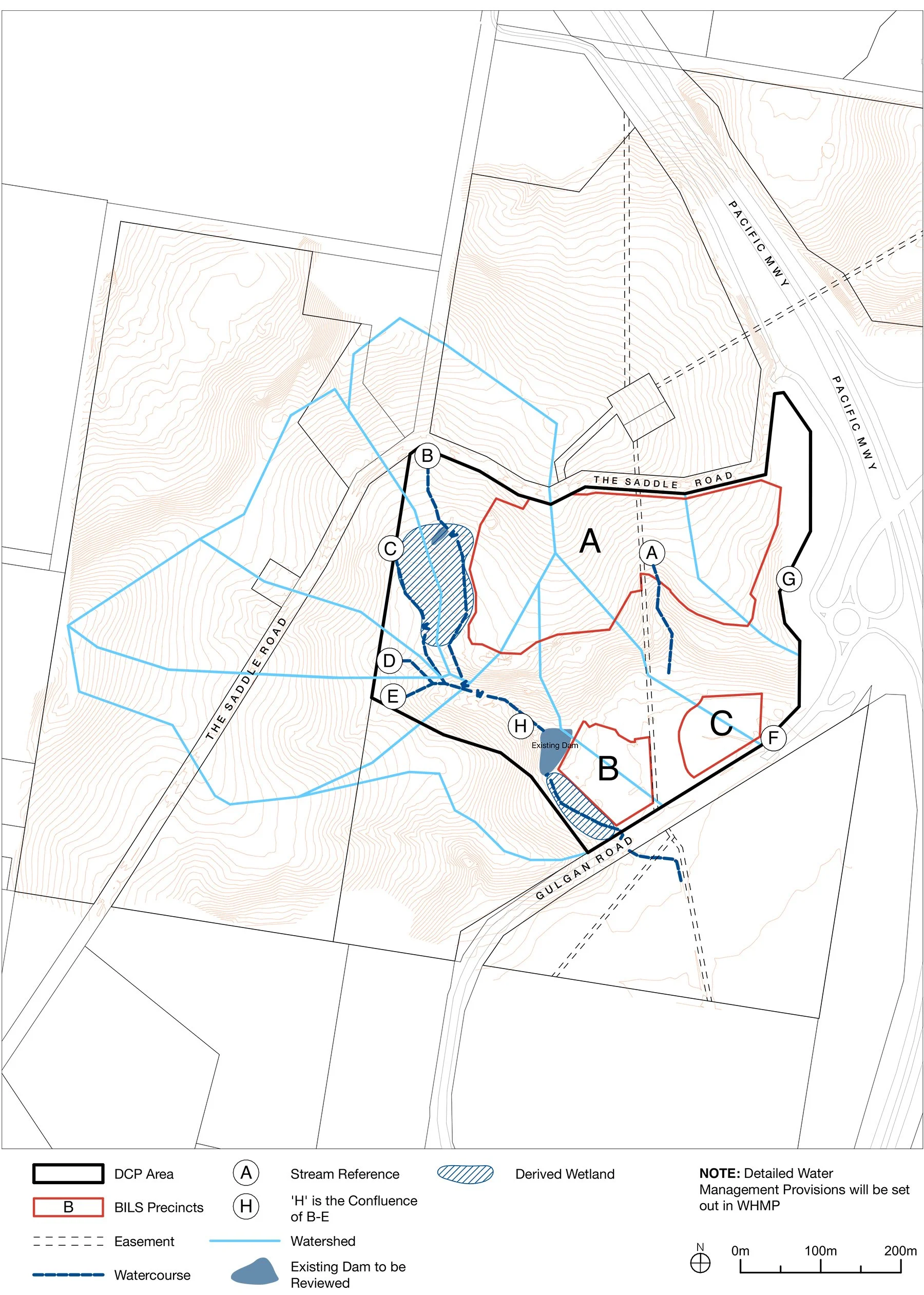
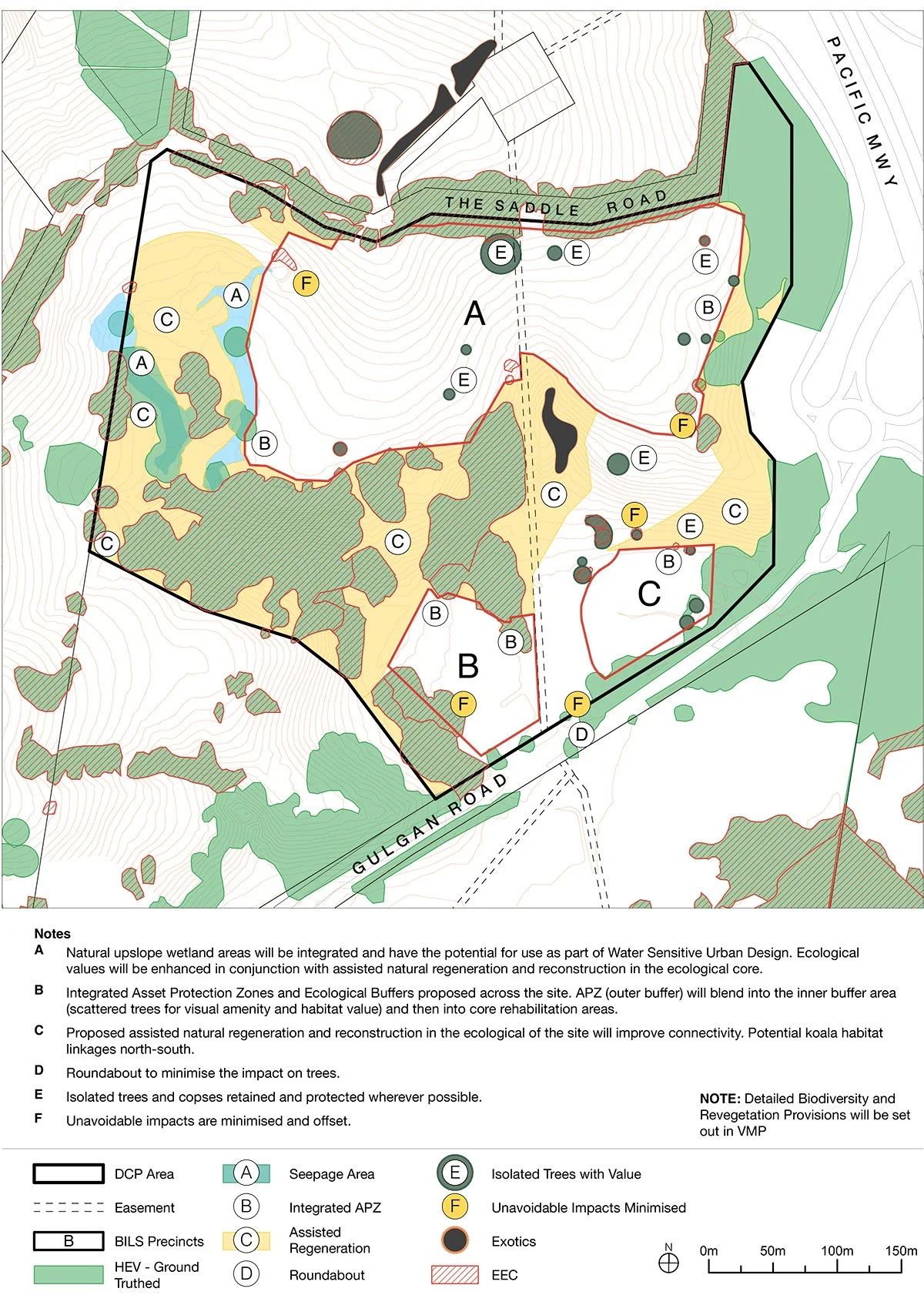
The site's natural values were mapped in detail and carried into binding controls: development is directed onto the precincts and away from the better vegetation, with significant trees and remnant vegetation retained and revegetation locked in. Water is managed in the landscape so the precinct doesn't worsen downstream flows. Asset-protection zones for bushfire sit largely within the precincts, and where they reach onto adjoining land it's managed under the approved bushfire plan. Wildlife is protected too, with pets kept clear of the bushland and fauna-friendly fencing.

What the DCP controls
How the precinct sits in the landscape
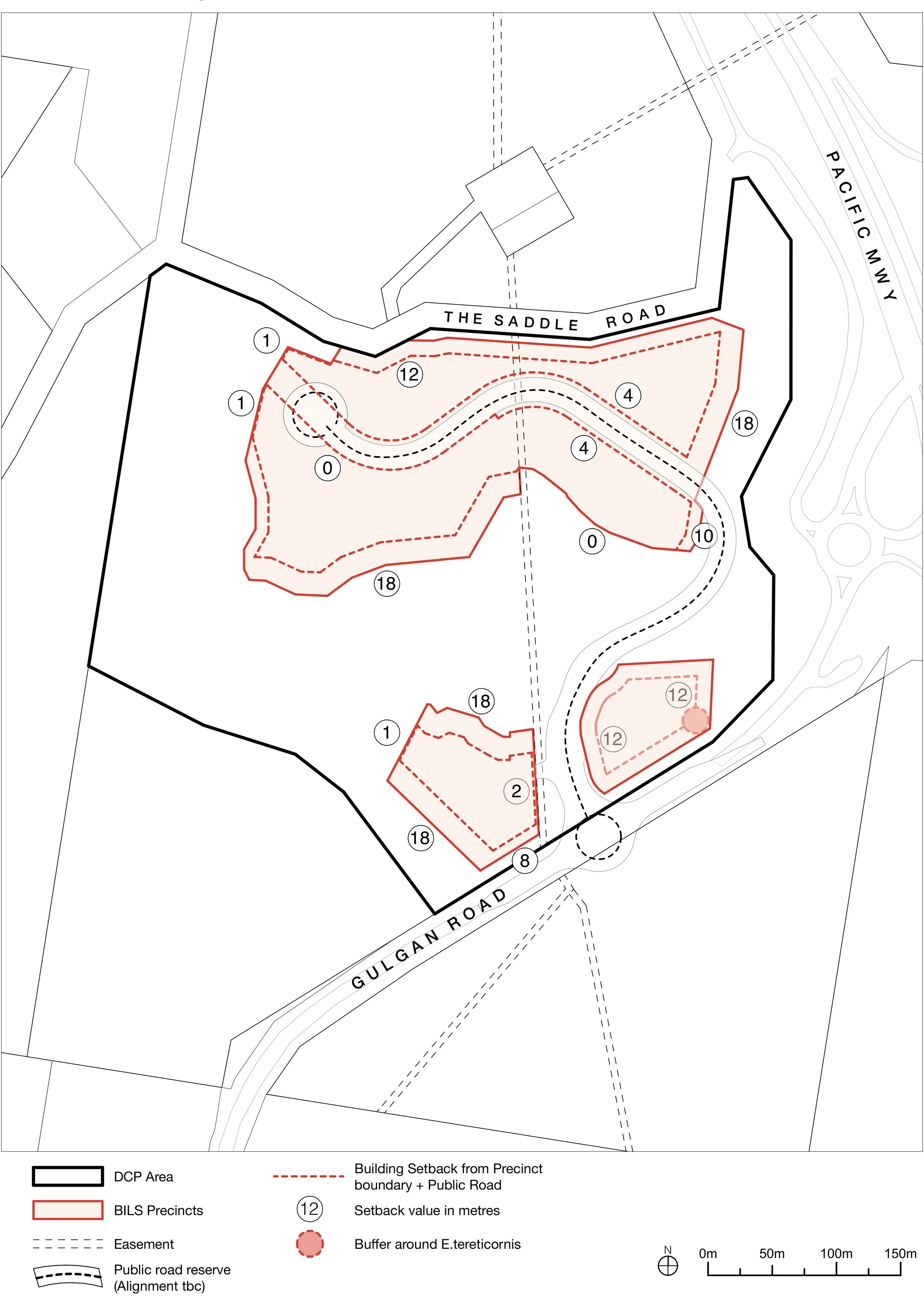
The chapter sets the desired character: a working precinct that sits with the land rather than destroying it. Its roof forms and materials take their cue from the region's working past, the saw-tooth sheds and old butter factories. Setbacks are set frontage by frontage, with landscaped screening along Gulgan Road, so the precinct settles into its rural surroundings rather than standing exposed. Buildings are designed for the subtropical climate, with passive cooling and the aim of running carbon-neutral.
The precincts and their uses
The chapter sets what belongs where, precinct by precinct: the business park and work-live space in Precinct A, artisanal workshops in Precinct B, light industry in Precinct C, and conservation and rural land in Precinct D. Work-live is held to genuine work-live: across Precinct A, homes can make up no more than half the floor space, each must be lived in by the people doing the work, and a home can't be split off and sold as a standalone dwelling. The precinct plan sets out where each use belongs.
Image: Habitat Byron Bay. Photo CFJ Photography
Caring for Country
The chapter asks that the precinct's design be guided by a Country-Centred Design Framework, prepared with First Nations expertise before the first development application, so that connection to Country shapes the layout and landscape from the start rather than being added afterwards.